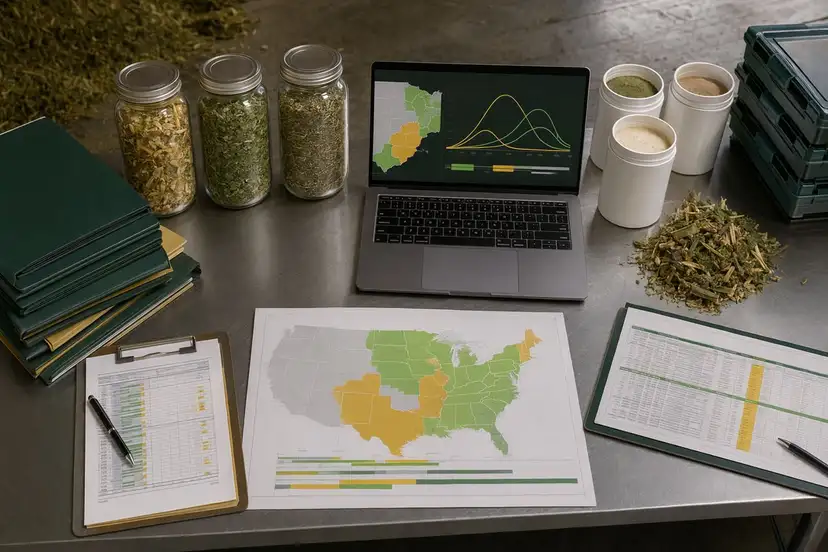
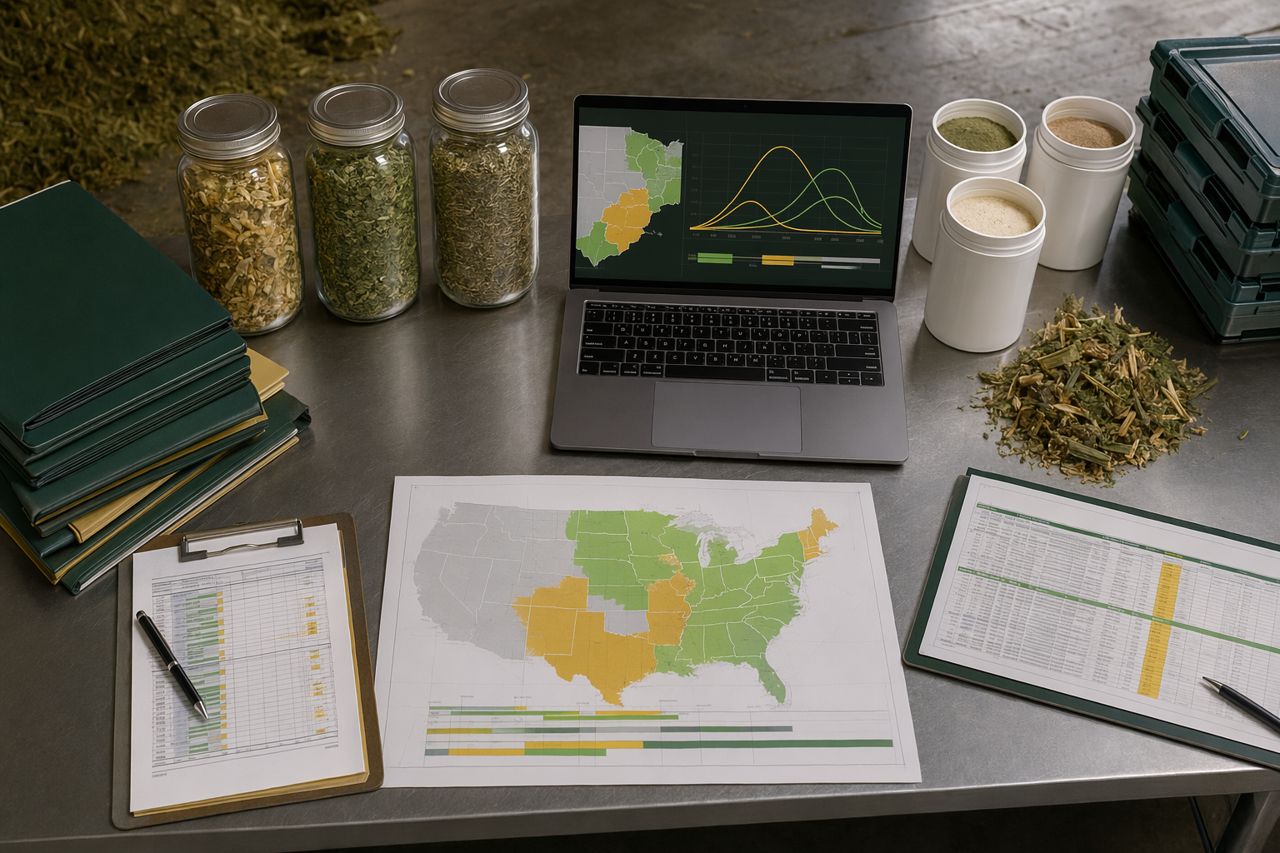
Regional forage calendars are a procurement tool, not just an agronomy reference
For a silage additive manufacturer, forage seasonality sets the rhythm of production. Corn silage, grass, alfalfa, sorghum, and mixed-forage programs do not arrive at the plant as a single national event. They move by region, dry matter target, weather pressure, crop maturity, contractor capacity, and local storage practice.
That matters when you are buying enzymes for inoculant and additive manufacture. If enzyme procurement is planned only against last year’s total volume, the plant can end up with the wrong material profile at the wrong time: too much inventory before a delayed season, insufficient stock when a region starts early, or rushed substitution when a formulation has already been released.
Clampdown Forage Labs supports product and procurement teams that need a more practical approach: align enzyme selection, inclusion planning, documentation, and shipment scheduling to the forage calendar that actually drives your customer demand.
Why regional harvest timing changes enzyme demand
A silage enzyme supplier for forage additive manufacturing should understand that harvest calendars affect more than order dates. They influence which additive formats move first, which enzyme blends are prioritized, and how production teams protect batch consistency under compressed lead times.
Regional forage timing can shift demand through:
- Crop type: grass-heavy markets may pull different enzyme profiles than corn-silage-dominant markets.
- Moisture and maturity variation: dry, mature forage can increase focus on fiber-access support, while wetter programs may prioritize fast fermentation support and clean compatibility with inoculants.
- Application format: water-soluble, dry carrier, and premix formats each create different blending and stability requirements.
- Dealer and contractor behavior: some regions order in bulk before the season; others reorder rapidly once chopping starts.
- Weather compression: a short cutting window can turn a routine replenishment cycle into a production bottleneck.
For manufacturers, the commercial issue is not simply availability. It is whether the enzyme system can be released into production with confidence when the order book tightens.
Build the procurement plan from forage windows backward
A reliable enzyme plan starts by mapping the likely commercial pull by region, then working backward through formulation and manufacturing checkpoints.
1. Segment demand by forage system
Avoid treating “silage season” as one demand block. Segment your forecast by forage type and region, such as:
- Early-season grass and small-grain silage programs
- Alfalfa and mixed-legume cuttings
- Summer sorghum and tropical forage windows
- Corn silage main harvest
- Late-season catch crops or emergency forage programs
This helps product managers decide which enzyme profiles need to be locked first and which can be held in flexible reserve.
2. Connect enzyme selection to product architecture
Before procurement volume is finalized, confirm how each enzyme component will sit inside the finished additive:
- Standalone enzyme product
- Enzyme plus lactic acid bacteria inoculant
- Enzyme-enhanced dry premix
- Water-soluble application pack
- Regional private-label formulation
- High-fiber or crop-specific additive line
The same ingredient decision can behave differently across these formats. Particle handling, solubility expectations, thermal exposure, blend order, carrier selection, and packaging all influence whether procurement stock becomes production-ready stock.
3. Lock compatibility before peak season
Peak harvest is the wrong time to discover that a new enzyme lot changes blend behavior or creates documentation delays. Compatibility review should be completed before regional demand accelerates.
Key checks include:
- Fit with bacterial inoculant strains used in the formulation
- Compatibility with acids, salts, carriers, flow agents, and nutrient adjuncts
- Performance stability in the intended pack format
- Handling suitability for your blending line
- Documentation alignment for internal QA and customer files
- Shelf-life expectations under your storage and distribution model
Clampdown Forage Labs works with manufacturers on formulation fit before seasonal pressure arrives, so purchasing decisions are tied to production reality rather than catalog assumptions.
Match enzyme procurement to manufacturing lead times
Procurement planning should reflect the full route from ingredient confirmation to finished goods release. For most additive plants, the timeline includes formulation approval, purchase order release, inbound logistics, receiving inspection, batch scheduling, blending, QA review, packaging, and shipment.
A forage calendar can be used to set procurement gates:
| Planning gate |
Manufacturing purpose |
Practical decision |
| Pre-season review |
Confirm product lineup and regional demand |
Select enzyme systems and reserve supply |
| Formulation freeze |
Reduce change risk before production |
Lock inclusion approach and compatibility documentation |
| Initial build |
Produce stock for early forage windows |
Prioritize fast-moving SKUs and private-label commitments |
| Peak harvest support |
Keep batch flow stable |
Maintain replenishment rhythm and backup lots |
| Late-season review |
Prevent overstock and support carryover |
Adjust reorder timing and packaging forecasts |
This structure gives procurement teams a disciplined way to avoid both shortages and unnecessary inventory exposure.
What product managers should request from an enzyme supplier
When evaluating an enzyme partner for forage additive manufacturing, ask for information that helps your plant run repeatably, not just ingredient descriptions.
Useful supplier support includes:
- Recommended inclusion ranges for your product format
- Guidance on enzyme selection by forage substrate and commercial positioning
- Compatibility discussion for inoculant-containing blends
- Stability expectations for the intended formulation and packaging route
- Batch documentation suitable for your QA workflow
- Lot-to-lot consistency controls
- Practical handling notes for blending and storage
- Lead-time guidance aligned to seasonal demand peaks
The goal is to reduce formulation uncertainty and prevent procurement from becoming a last-minute technical negotiation.
Planning for early, delayed, and compressed seasons
Regional forage calendars are only useful if they include variance. A procurement plan should account for three common scenarios.
Early start
If warmer conditions accelerate harvest, manufacturers need enzyme supply already qualified and ready for production. This favors pre-approved blends, reserved stock, and clear reorder triggers.
Delayed start
If weather delays chopping, excess early inventory can sit longer than planned. Stability expectations, packaging condition, and warehouse environment become more important.
Compressed window
If multiple regions harvest at once, production teams may need to switch rapidly between SKUs. Enzyme systems with predictable handling and clean documentation help keep blending schedules moving.
How Clampdown Forage Labs supports seasonal procurement
Clampdown Forage Labs supplies enzyme solutions for silage additive manufacturers that need formulation-ready inputs, repeatable batch behavior, and practical technical support. We help teams connect forage calendar planning to enzyme selection, inclusion strategy, compatibility review, and commercial supply timing.
Our work is built around manufacturing needs:
- Enzyme selection for forage additive product lines
- Support for inoculant-compatible formulations
- Practical guidance for inclusion planning
- Supply coordination for regional harvest peaks
- Documentation for internal QA and customer technical files
- Consistency-focused batch support
We are not here to romanticize the harvest. We are here to help your plant prepare for it.
Procurement checklist for the next forage season
Before your next seasonal build, confirm:
- Which regions drive your first, peak, and final demand windows
- Which forage types are tied to each commercial product
- Which enzyme systems are approved for each formulation
- Whether inclusion planning is current for the finished pack format
- Whether compatibility has been reviewed against inoculants and carriers
- Whether supplier lead times match your build schedule
- Whether documentation is complete before purchase release
- Whether backup supply options are technically equivalent and pre-cleared
A clean procurement plan turns the forage calendar into a production advantage.
Request a quote
Planning enzyme supply for the next silage season? Send your formulation format, target forage applications, expected production windows, and packaging route through the on-site request a quote form. Clampdown Forage Labs will review fit, documentation needs, and supply timing for your manufacturing program.