Oxygen Management at the Bunk Face Is a Brand Education Issue
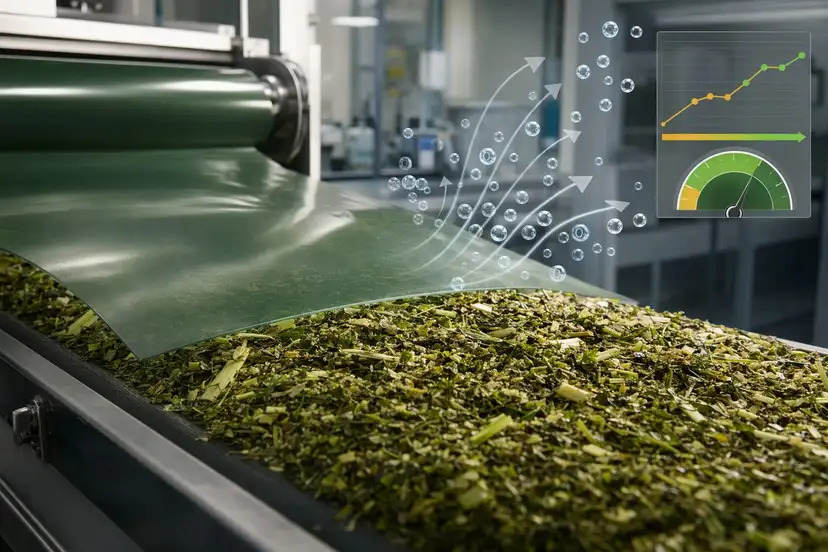
For a silage additive manufacturer, aerobic stability is not only a field-performance topic. It is a product-positioning, documentation, and dealer-training issue. Once a clamp or bunker is opened, oxygen exposure can quickly change how customers judge your additive: face temperature, visible spoilage, feed refusal, dry matter loss, and inconsistent unloading all shape confidence in the brand.
That makes oxygen management at the bunk face a useful education platform for additive brands. It connects practical silage handling with the formulation logic behind inoculants, enzymes, and complementary preservation systems.
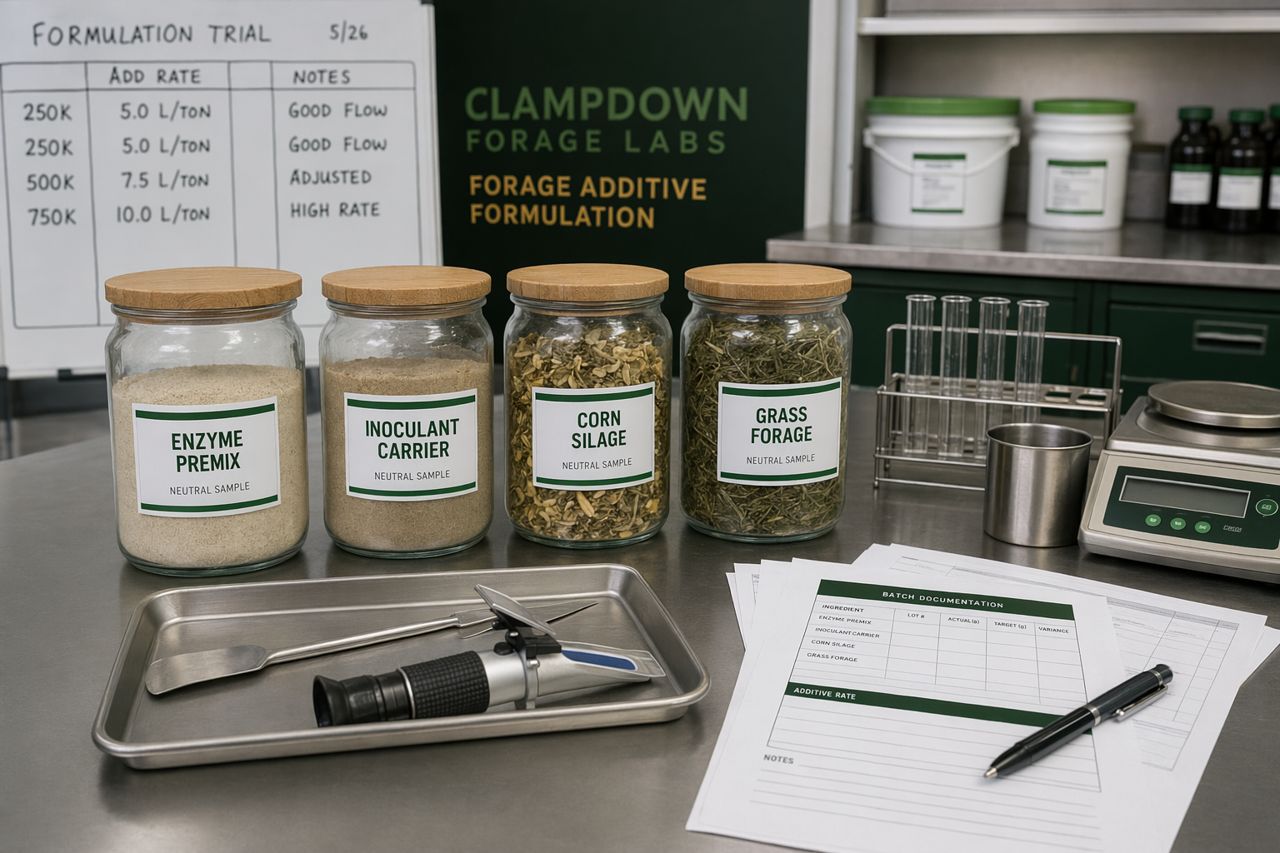
Clampdown Forage Labs supports manufacturers that need enzyme components built for forage additive lines, with attention to inclusion rate, stability, compatibility, documentation, and repeatable batch performance.
If you are evaluating a silage enzyme supplier for forage additive manufacturing, oxygen-management messaging is one place where ingredient selection and commercial education need to work together.
Why the Bunk Face Matters to Product Managers
Silage performance is often sold at harvest, but it is judged at feed-out. The bunk face is where customers see whether the fermentation system held up under real handling conditions.
When oxygen enters exposed forage, it can reactivate yeasts, molds, and other spoilage pathways. The result may be heating, nutrient loss, reduced palatability, and a wider gap between promised value and observed value.
For additive manufacturers, the key question is not simply, “Can we improve fermentation?” It is:
- Can the product help support a cleaner fermentation pathway?
- Can it fit consistently into existing inoculant or preservative formats?
- Can dealer teams explain what the additive does and what it does not control?
- Can documentation support responsible claims across markets and forage types?
- Can batch performance remain repeatable from production through distribution?
Where Enzymes Fit in Oxygen-Management Education
Enzymes do not replace proper packing, sealing, face management, or feed-out discipline. They are not a shortcut for poor bunker practice. In a well-designed additive system, however, enzyme selection can help support the broader fermentation strategy by influencing substrate availability, fiber interaction, and the fermentation environment targeted by the formulation.
For additive brands, that distinction matters. Strong education avoids overpromising. It helps customers understand that enzymes are part of a controlled formulation architecture, not a magic treatment applied against every storage or feed-out variable.
A practical education message might frame enzyme value around:
- Supporting the intended fermentation profile
- Helping make targeted plant carbohydrates more accessible within the formulation strategy
- Complementing selected lactic acid bacteria strains where compatibility is established
- Maintaining manufacturing consistency in dry blends, water-soluble formats, or premix systems
- Preserving product integrity during storage and distribution when properly specified
Formulation Questions Before Building the Claim
Before building oxygen-management messaging around an enzyme-containing additive, product teams should confirm the manufacturing fundamentals.
1. What forage segment is the product built for?
Corn silage, grass silage, alfalfa, small-grain forage, and high-moisture forage systems place different demands on an additive. The enzyme package should match the intended forage profile and the brand’s positioning, rather than being treated as a generic line-item.
2. What is the desired formulation format?
Dry carrier blends, soluble powders, concentrated premixes, and liquid-compatible systems each create different requirements for flowability, dispersion, moisture tolerance, and stability. The enzyme component should be selected with the finished manufacturing format in mind.
3. Which microbial strains must it live beside?
Many silage additives combine enzymes with inoculant organisms. Compatibility is therefore a commercial requirement, not just a laboratory preference. Product managers need confidence that the enzyme choice will not create avoidable formulation stress or distribution risk.
4. What documentation will support sales and regulatory review?
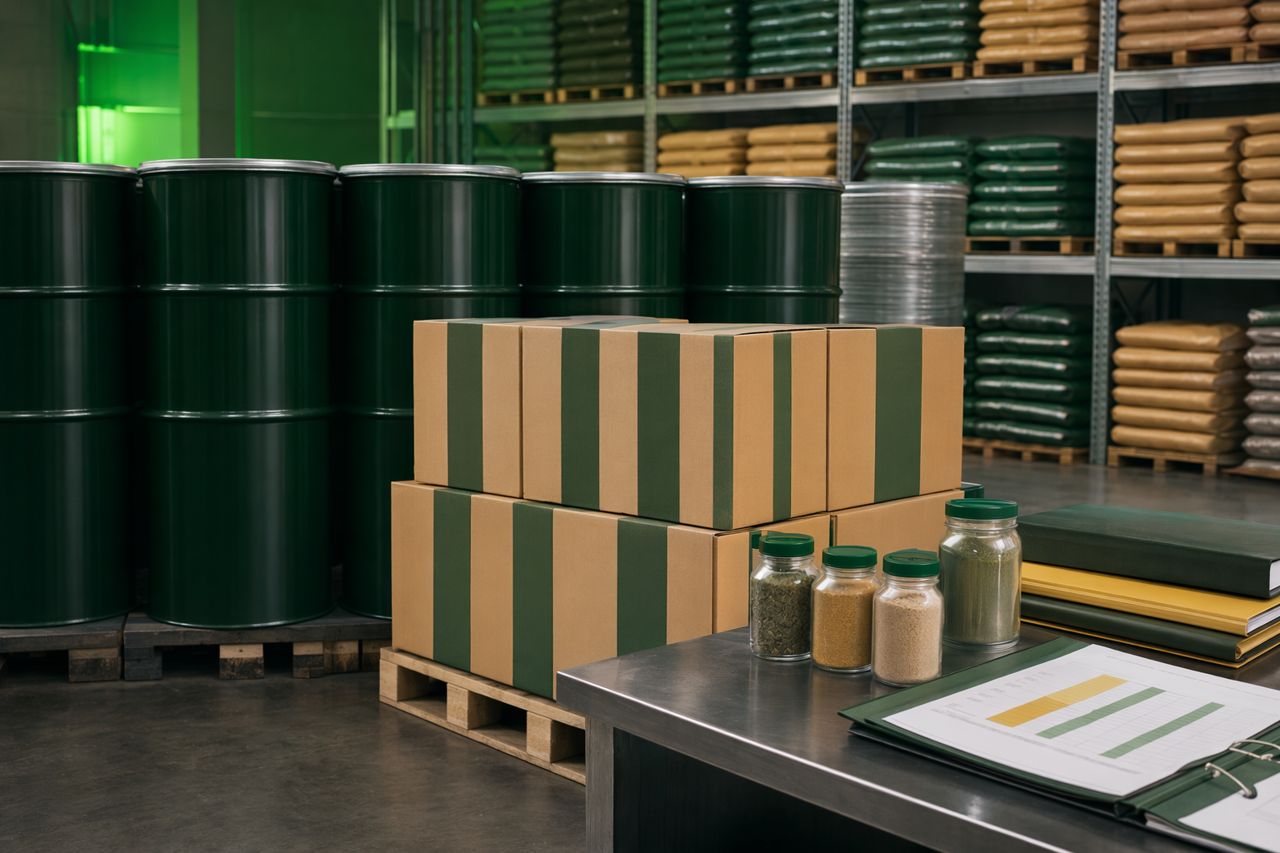
Clear specification documents, allergen and safety statements where applicable, production traceability, storage guidance, and batch documentation help your technical, procurement, and commercial teams move faster.
5. What claims can the sales team responsibly make?
Oxygen-management education should separate additive function from farm management. A formulation may support fermentation outcomes, but face discipline, removal rate, packing density, sealing quality, and weather exposure remain critical variables.
Dealer Education: Keep It Practical and Defensible
Forage additive brands often depend on dealer networks, nutrition consultants, and regional sales teams. If the education message is too broad, it becomes hard to repeat. If it is too technical, it may never reach the customer clearly.
A useful oxygen-management education module can be built around five simple points:
- Oxygen exposure begins at opening and increases with rough face management.
- Heating is a visible sign of aerobic activity and nutrient loss risk.
- Additives should be selected as part of a fermentation system, not as a replacement for good storage practice.
- Enzymes can support the formulation strategy when matched to forage type, inoculant design, and application format.
- Consistent manufacturing and documentation help keep the commercial promise repeatable.
This gives sales teams a cleaner explanation: the product supports a defined fermentation objective, while the producer still controls the physical oxygen-management variables.
What Manufacturers Should Ask an Enzyme Supplier
When sourcing enzyme components for silage additive manufacturing, ask questions that connect directly to finished-product reliability:
- Can the enzyme be supplied in a format suited to our manufacturing process?
- Is the material appropriate for the intended forage-additive application?
- What stability information is available for our storage and blending conditions?
- How should compatibility be evaluated with our selected inoculant strains and carriers?
- What documentation supports procurement, quality, and customer-facing technical teams?
- Can batch-to-batch supply be managed for repeatable finished-product performance?
- Is the supplier prepared to discuss commercial scale-up, not just sample evaluation?
Clampdown Forage Labs works with silage additive manufacturers that need enzyme inputs selected for formulation fit, compatibility review, and production-ready documentation.
Building a Stronger Additive Brand Around Oxygen Management
Oxygen-management education gives your additive brand a practical way to discuss performance after the silo is opened. It also protects the brand from weak claims by showing where formulation ends and management begins.
For product managers, the strongest position is usually not the loudest claim. It is a repeatable, documented, formulation-ready product story that your sales team can explain and your quality team can support.
That means specifying enzyme components with care. The right supplier conversation should cover forage target, additive format, inoculant compatibility, storage stability, documentation needs, and commercial batch expectations.
Request a Quote
If you are building or revising a silage additive line and need enzyme components matched to your formulation requirements, use the on-site request a quote form. Share your target forage segment, product format, compatibility priorities, and documentation needs, and our team will respond with a practical supply discussion.