Liquid vs Dry Silage Additive Formats: What Manufacturers Should Decide Before Scale-Up
For a silage additive manufacturer, format is not a packaging afterthought. Liquid and dry formats change how enzymes disperse, how inoculants remain compatible, how production teams control batch-to-batch variation, and how a finished product performs when applied to chopped forage.
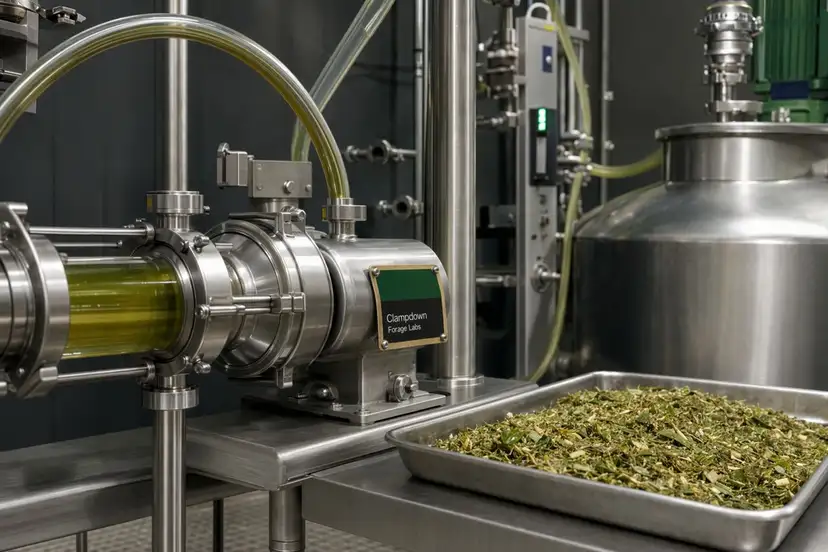
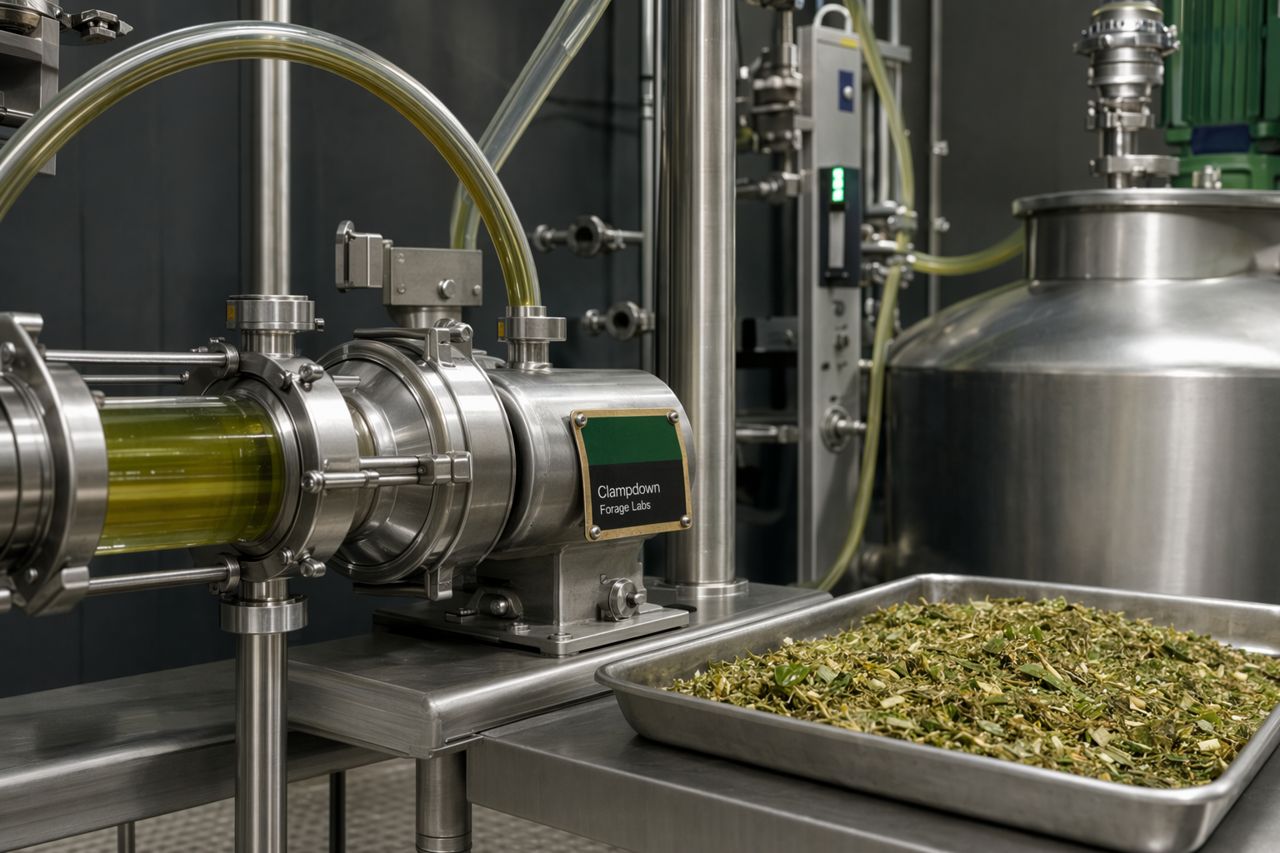
Clampdown Forage Labs supports product managers and formulation teams selecting enzyme systems for forage additive manufacturing. If you are comparing liquid versus dry delivery, the right answer depends on your plant equipment, target inclusion rate, co-formulants, shelf-life target, customer application route, and documentation requirements.
Primary consideration: choose the format that protects enzyme function through manufacturing, storage, distribution, and field application — not simply the format that looks easier on a specification sheet.
The practical difference between liquid and dry formats
Both formats can support strong forage fermentation outcomes when designed correctly. The trade-off is operational.
Liquid silage additive formats
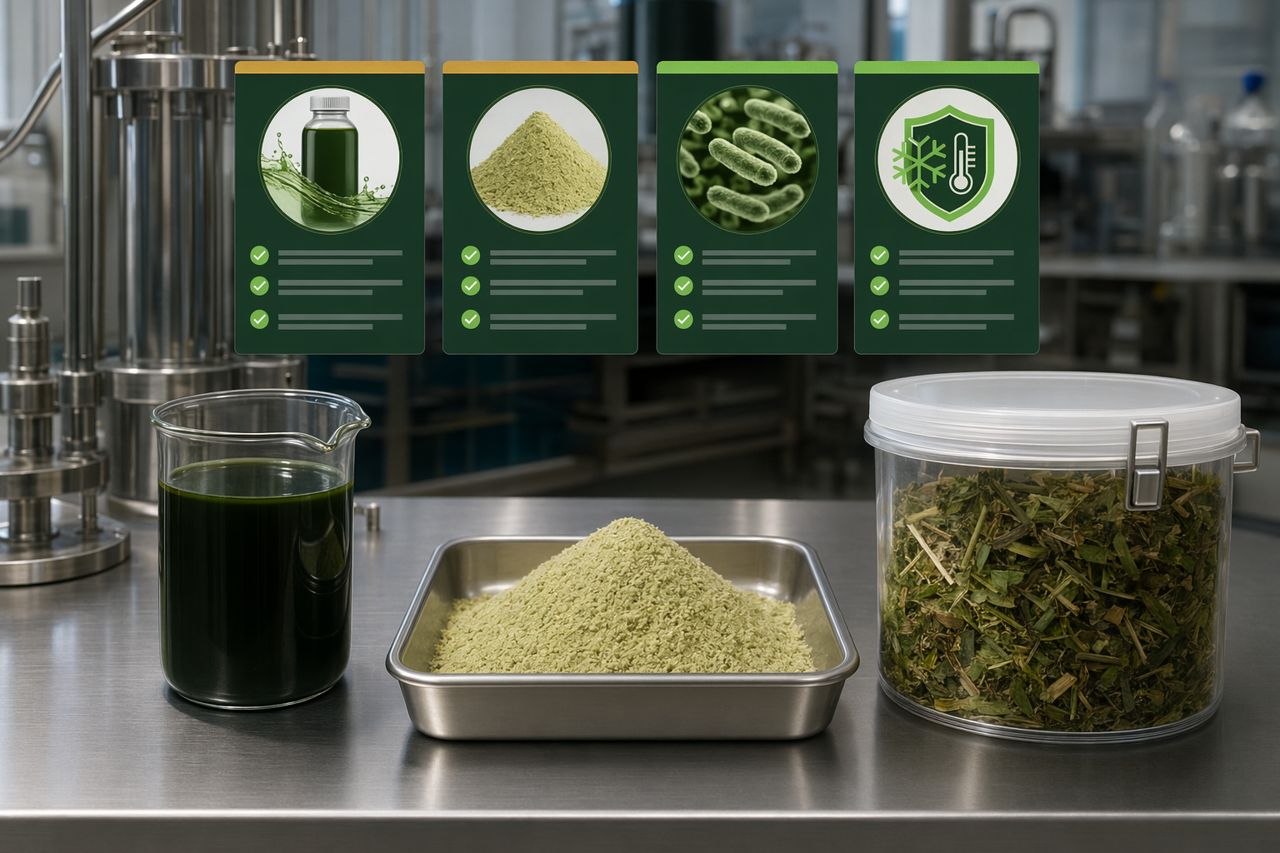
Liquid formats are often selected when the finished additive will be diluted or metered through liquid application systems. They can support fast dispersion, simplified blending into aqueous bases, and controlled addition of soluble enzyme components.
Typical manufacturing advantages:
- Faster integration into liquid premixes and concentrates
- Easier uniform distribution in compatible aqueous systems
- Useful for application programs where customers already use liquid dosing equipment
- Potential for cleaner handling where dust control is a priority
Typical formulation watchpoints:
- Preservative compatibility with enzyme and microbial components
- pH window control across the finished formulation
- Temperature exposure during processing and storage
- Container interaction, phase behavior, and settling risk
- Microbial inoculant viability if blended into the same liquid system
Liquid formats can be commercially strong when the formulation is built around controlled water chemistry, compatible preservation, and a realistic distribution environment.
Dry silage additive formats
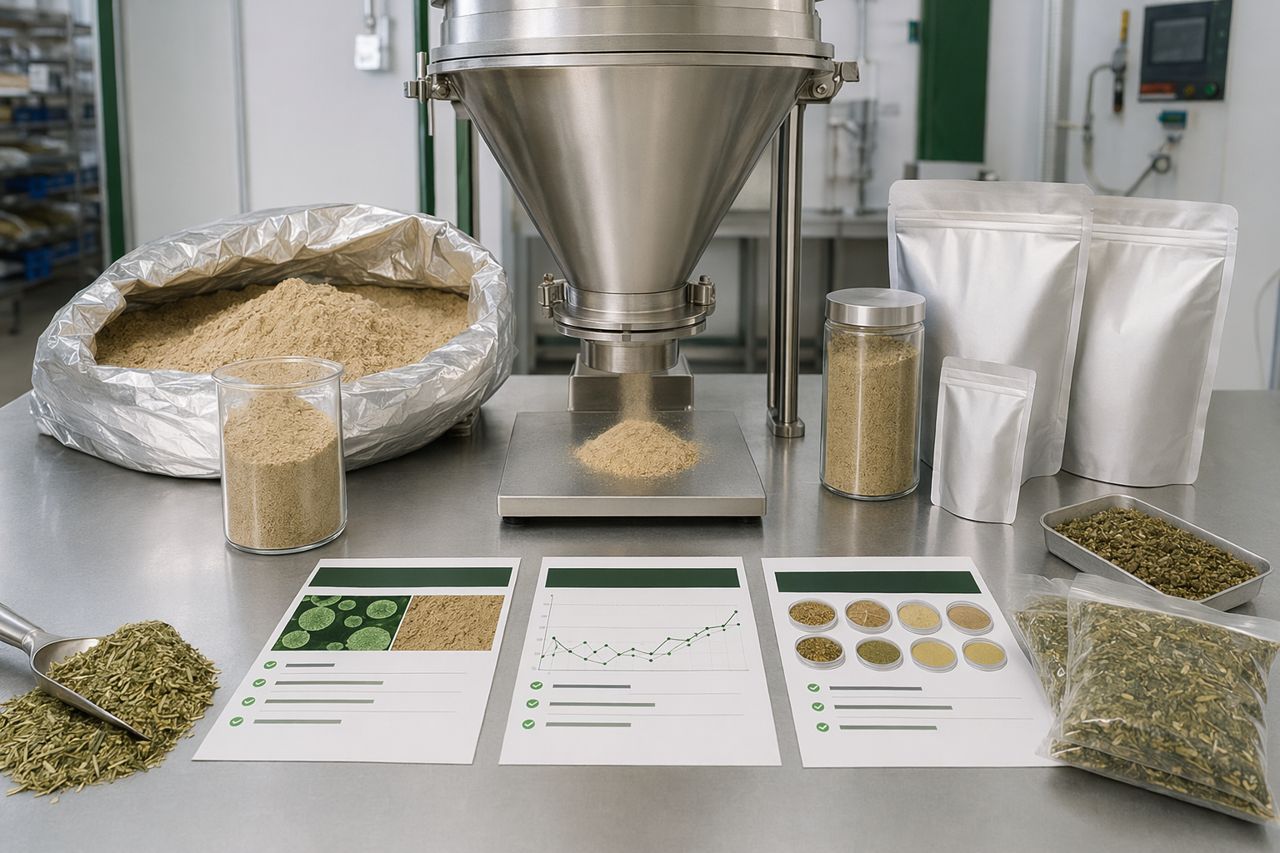
Dry formats are often selected for powder blends, sachets, soluble concentrates, or dry premixes that are reconstituted before use. They can be attractive for shelf stability, logistics, and compatibility with dry microbial carriers.
Typical manufacturing advantages:
- Strong fit with powder blending and dry pack-out lines
- Reduced water-driven degradation risk in storage
- Flexible carrier selection for flow, dispersion, and blend uniformity
- Logistics advantages where compact dry formats reduce handling complexity
- Easier separation of moisture-sensitive components until use
Typical formulation watchpoints:
- Dust management and operator handling controls
- Uniform distribution at low inclusion levels
- Carrier compatibility with enzyme and inoculant components
- Dissolution behavior when the customer reconstitutes the product
- Moisture barrier performance in packaging
Dry formats can be the better route when the priority is long storage resilience, dry blend compatibility, or separation of sensitive components before application.
Do enzymes behave differently in each format?
Yes — not because one format is automatically better, but because the stress profile changes.
In liquid systems, enzymes are exposed to the chemistry of the solution every day of storage. pH, preservatives, salts, trace contaminants, and temperature swings all matter. A liquid formulation should be screened as a full system, not just as enzyme plus water.
In dry systems, enzymes are exposed to physical handling, carrier effects, moisture ingress, and reconstitution behavior. A dry formulation should be checked for blend uniformity, flow, segregation risk, and performance after storage in the selected pack.
For forage additive manufacturing, the strongest programs treat the enzyme as part of a complete commercial product architecture: enzyme selection, carrier or solvent system, inoculant compatibility, packaging, documentation, and release criteria.
Compatibility with silage inoculants
Many silage additive lines combine enzymes with lactic acid bacteria or other fermentation-supporting components. Compatibility should be verified under the actual formulation conditions.
Key questions for product managers:
- Will the enzyme format protect the microbial component during storage?
- Does the preservative system interfere with the inoculant?
- Does the carrier introduce moisture, acidity, alkalinity, or flow problems?
- Will the product remain uniform through blending, filling, transport, and application?
- Can the finished format support the claims and documentation required by your sales channel?
A format decision should not be made from enzyme data alone. It should be made from finished-product behavior.
Stability is a supply-chain issue, not just a lab issue
A silage additive may leave the plant within specification and still disappoint if the format is not matched to storage and distribution realities. Product managers should evaluate stability across the expected commercial route: production hold time, warehouse conditions, shipment duration, dealer storage, and on-farm preparation before use.
For liquid formats, focus on solution stability, microbial control, phase consistency, and container suitability.
For dry formats, focus on moisture protection, flow after storage, caking resistance, blend uniformity, and reconstitution performance.
The best format is the one that lets your manufacturing team release repeatable batches and gives your commercial team confidence that the product will perform when it reaches forage.
Decision matrix: liquid or dry?
| Manufacturing priority |
Often favors liquid |
Often favors dry |
| Direct use in liquid application systems |
Yes |
Sometimes |
| Powder blend compatibility |
Sometimes |
Yes |
| Dust control |
Yes |
Requires controls |
| Moisture-sensitive co-formulants |
Requires careful design |
Often easier |
| Compact logistics |
Sometimes |
Yes |
| Fast dispersion into water |
Yes |
Depends on carrier |
| Long storage resilience |
Formulation-dependent |
Often strong with correct packaging |
| Inoculant co-formulation |
Requires compatibility work |
Often practical with suitable carriers |
This matrix is a starting point. The correct choice depends on your exact product claim, process, pack, and customer use case.
What Clampdown Forage Labs helps specify
As a silage enzyme supplier for forage additive manufacturing, Clampdown Forage Labs helps manufacturers define enzyme inputs that fit the finished product — not the other way around.
We can support discussions around:
- Enzyme class selection for forage substrate targets
- Liquid versus dry input format strategy
- Inclusion-rate planning for finished additive design
- Compatibility with inoculants, carriers, preservatives, and processing conditions
- Documentation packages for purchasing, QA, and regulatory review
- Batch consistency expectations for repeat manufacturing
- Packaging and storage considerations linked to enzyme stability
The goal is a format that your production team can make repeatedly, your QA team can release confidently, and your customers can apply without unnecessary complexity.
When a dual-format strategy makes sense
Some manufacturers should not force one format across all markets. A liquid concentrate may fit one customer segment, while a dry soluble or premix format may support another. Dual-format strategies can be useful when application equipment, distribution climate, pack size, or dealer handling practices vary significantly.
The critical requirement is to avoid assuming the same enzyme input behaves identically in both formats. Each format needs its own compatibility review, stability plan, manufacturing controls, and release documentation.
Request a formulation quote
If you are developing or reformulating a silage additive and need an enzyme input matched to liquid or dry manufacturing, send us your target format, co-formulants, process constraints, and commercial pack requirements.
Request a quote through the on-site form and Clampdown Forage Labs will respond with a practical supply and formulation discussion.