Inoculant Carriers, Moisture, and Enzyme Blend Stability
For silage additive manufacturers, enzyme performance is not only determined by the enzyme system selected. It is also shaped by the carrier, the moisture load, the order of addition, packaging protection, and the way the finished blend moves through filling, storage, and customer application.
A strong formulation can lose commercial value if it cakes in a drum, segregates in a sachet, reacts with an aggressive mineral carrier, or loses consistency after sitting in a warm warehouse. Product managers need more than an enzyme name on a spec sheet. They need a supplier that understands how enzyme blends behave inside real inoculant and forage additive manufacturing systems.
Clampdown Forage Labs works as a formulation-led silage enzyme supplier for forage additive manufacturing, helping teams build enzyme systems that fit carrier platforms, microbial inoculants, dry blend formats, and field-facing product claims.
Why carrier selection matters
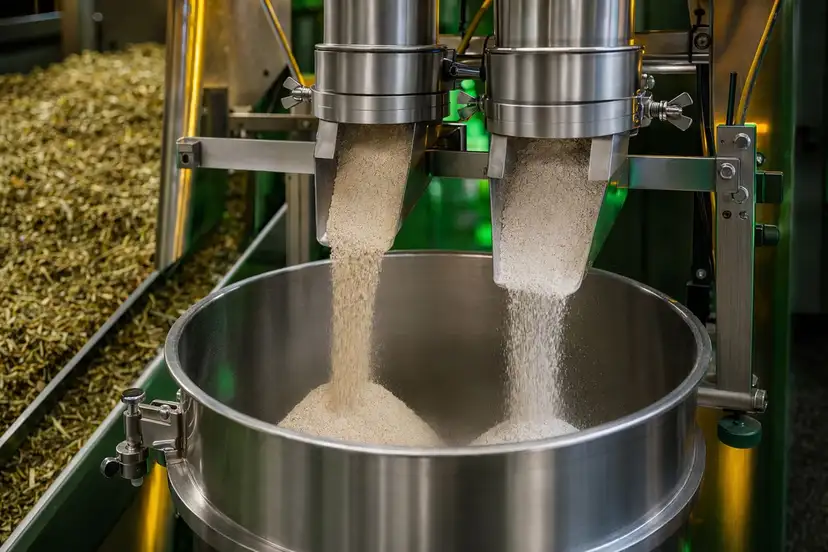
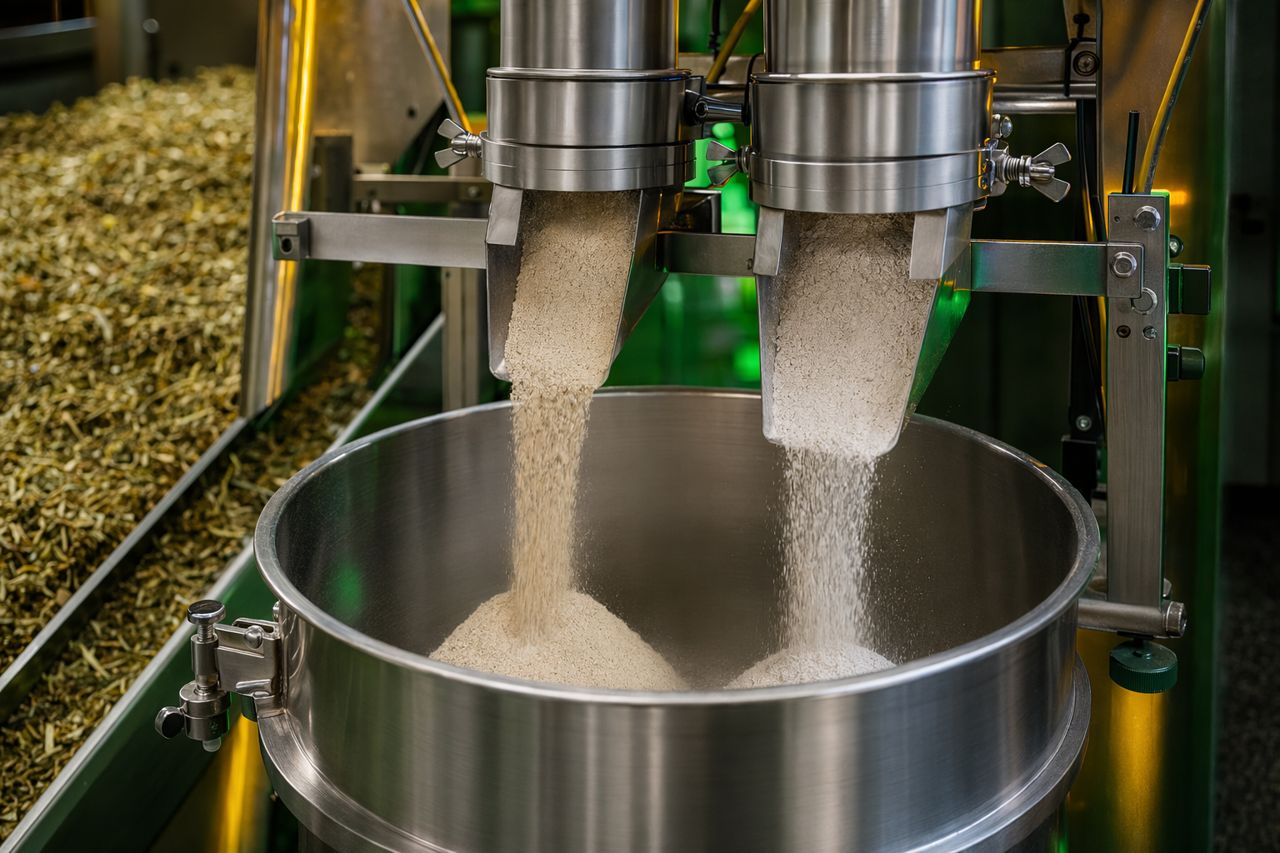
The carrier is not passive. It influences flowability, blend uniformity, moisture exposure, enzyme contact, and how accurately the product can be metered into the final application rate.
Common carrier-related risks include:
- Moisture pickup during storage leading to clumping or reduced blend consistency
- Poor particle match causing enzyme segregation from inoculant or nutrient fractions
- Surface reactivity that can reduce stability over the intended shelf-life window
- Dusting and handling loss during weighing, blending, and packing
- Inconsistent release when the product is diluted, dissolved, or applied in the field
For a commercial silage additive plant, these are not laboratory inconveniences. They affect batch release, customer complaints, rework, line efficiency, and repeat orders.
Moisture is a formulation variable, not an afterthought
Enzyme blends for silage additives often sit alongside bacteria, sugars, minerals, anti-caking aids, and carriers with different moisture profiles. Even small shifts in the moisture environment can change how a powder flows, how evenly it disperses, and how stable the finished product remains.
A practical moisture strategy should define:
- Incoming carrier expectations before blending
- Moisture-sensitive ingredient handling during weighing and staging
- Blend order to reduce direct exposure between incompatible components
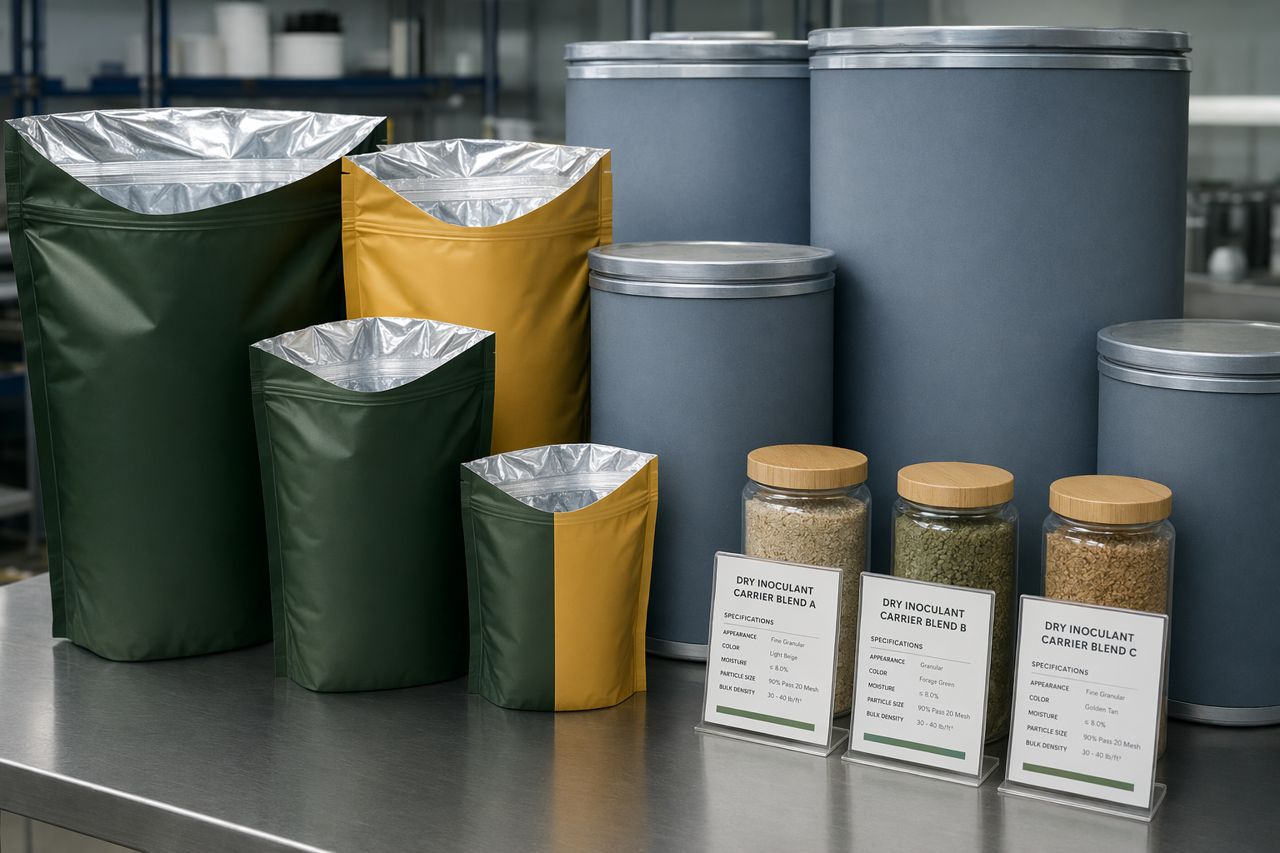
- Packaging barrier requirements for the shelf-life target
- Storage conditions aligned with commercial distribution routes
The goal is not to over-engineer the product. The goal is to prevent avoidable instability while keeping the formulation manufacturable at scale.
Enzyme stability inside inoculant blends
Silage enzyme systems are typically selected to support forage substrate access, fermentation efficiency, and more predictable preservation outcomes. But once enzymes are added to a multi-component inoculant blend, the finished product becomes a stability system.
Key compatibility questions include:
- Does the enzyme system tolerate the chosen carrier platform?
- Does it remain stable beside the microbial inoculant through the target shelf-life window?
- Does the formulation maintain blend uniformity after transport vibration and warehouse handling?
- Can the plant dose and pack the material without excessive dusting or build-up?
- Does the final product support the intended application-rate structure?
Clampdown Forage Labs evaluates enzyme selection through this manufacturing lens. We help product teams match enzyme systems to the practical conditions of dry blending, liquid concentrates, water-soluble formats, private-label products, and regional distribution demands.
Avoiding segregation in dry forage additive blends
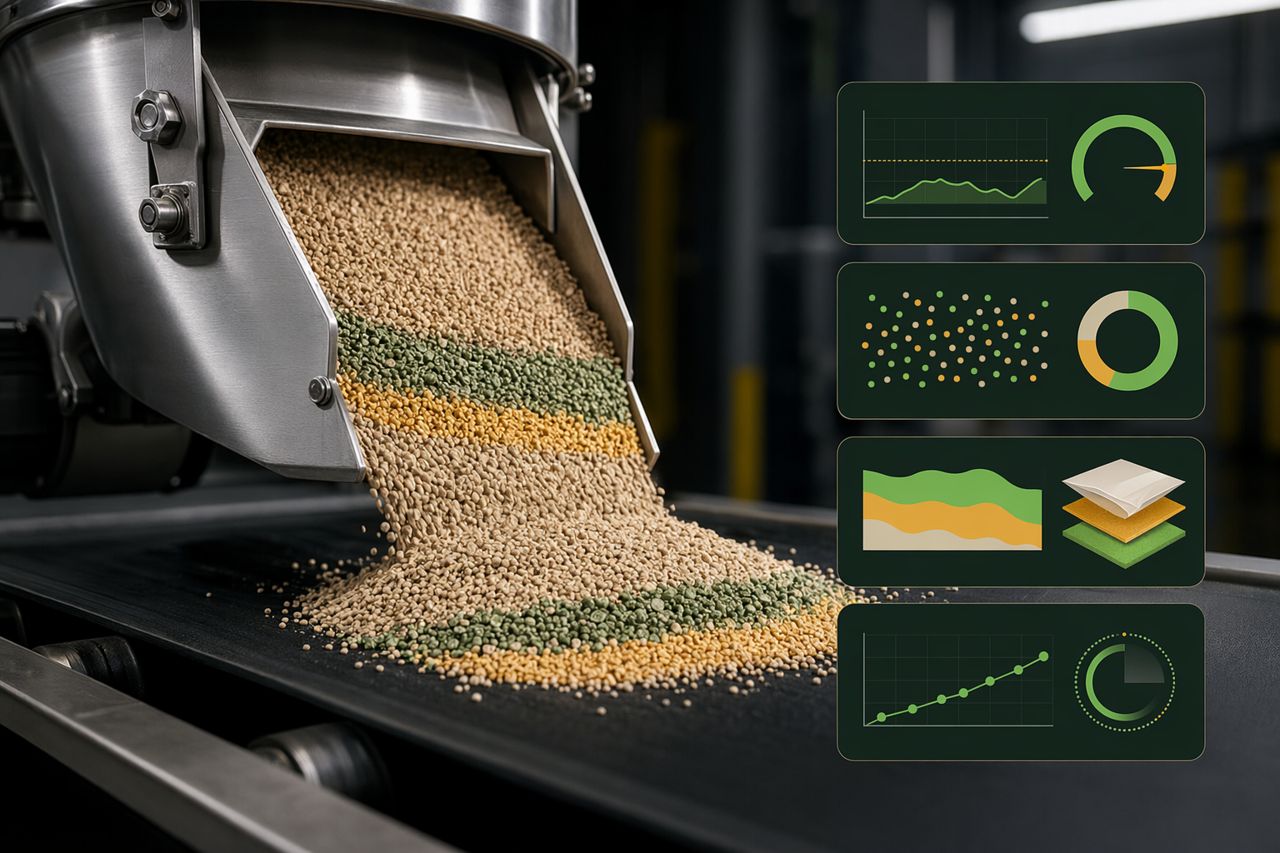
Segregation is one of the most common reasons an otherwise sound formulation becomes inconsistent. When particles differ too much in size, density, or surface behavior, the final blend can separate during hopper discharge, vibration, shipping, or customer handling.
For enzyme-containing inoculants, segregation can create two problems at once: inconsistent enzyme delivery and inconsistent inoculant delivery. That can undermine batch confidence even when every raw material entered the mixer correctly.
Formulation controls may include:
- Carrier particle profile adjustment
- Enzyme granule or powder format selection
- Blend sequence refinement
- Anti-caking and flow-support decisions
- Packaging size and fill-density review
- Finished blend sampling plans based on commercial handling points
The right answer depends on the product format and plant process. A small sachet program, bulk drum line, and soluble concentrate blend may require different stability choices.
Compatibility with microbial inoculants
Enzyme systems and bacterial inoculants are often designed to work together in the field, but they still need to coexist in the factory pack. Compatibility should be considered across storage, dilution, and application.
Product managers should review:
- Exposure time between enzyme and bacteria in the finished blend
- Carrier effects on both enzyme and microbial stability
- Moisture protection for the total system, not only one ingredient
- Dilution behavior when the customer prepares applicator tanks
- Label and documentation alignment across active components
Clampdown Forage Labs supports formulation teams with enzyme options that can be integrated into inoculant programs without creating unnecessary manufacturing friction.
Documentation that helps product teams move faster
B2B buyers need clear technical support, not vague ingredient descriptions. For commercial forage additive manufacturing, documentation should help teams qualify, formulate, release, and defend the product.
Useful supplier documentation can include:
- Product specification alignment for the selected enzyme blend
- Recommended handling and storage guidance
- Compatibility discussion for common silage additive formats
- Batch-to-batch consistency documentation
- Allergen, regulatory, and declaration support where applicable
- Packaging and logistics information for planned production scale
This documentation reduces qualification time and supports smoother handoff between R&D, procurement, QA, production, and commercial teams.
Building a more stable enzyme blend brief
Before requesting an enzyme blend, silage additive manufacturers can speed up development by defining the operating brief clearly.
Bring these details into the conversation:
- Target forage focus: grass, maize, legume, small grain, or mixed forage
- Desired enzyme role: fiber access, starch support, viscosity reduction, or broader substrate release
- Product format: dry inoculant, soluble powder, liquid concentrate, premix, sachet, drum, or private-label pack
- Carrier platform and known compatibility limits
- Target inclusion rate and application-rate structure
- Shelf-life expectation and storage environment
- Packaging format and distribution geography
- Existing microbial strains or additive components to protect
A complete brief helps narrow enzyme options quickly and reduces reformulation cycles.
What Clampdown Forage Labs brings to the blend table
Clampdown Forage Labs supplies enzyme systems for silage additive manufacturers that need practical fit, reliable documentation, and repeatable batch performance. We focus on the realities of forage additive production: carriers, moisture, compatibility, scale-up, filling behavior, and product claims that must hold up beyond the first trial batch.
Our formulation support can help you:
- Select enzyme systems aligned with forage substrate targets
- Improve blend stability in dry and soluble additive formats
- Reduce clumping, segregation, and handling loss risks
- Build compatibility around microbial inoculants and carriers
- Prepare documentation for internal approval and customer-facing technical teams
- Move from concept blend to production-ready supply with fewer avoidable revisions
Request a quote
If you are developing or improving a silage inoculant, forage additive premix, or private-label enzyme blend, send your formulation brief through our on-site request a quote form. Clampdown Forage Labs will review the carrier system, target format, compatibility needs, and commercial scale so we can recommend an enzyme supply path built for stable manufacturing.