High Dry Matter Silage Additive Challenges
High dry matter forage is not just a farm-side packing problem. For a silage additive manufacturer, it changes how an enzyme package must be selected, blended, documented, and delivered.
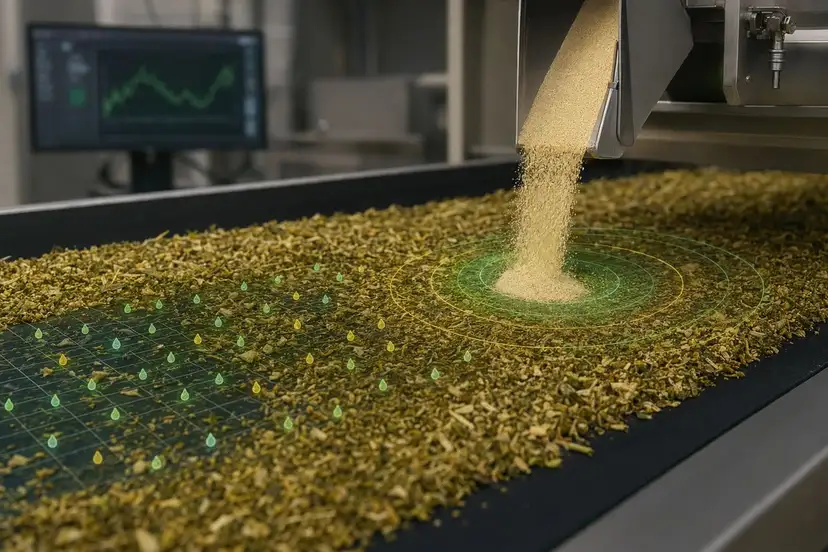
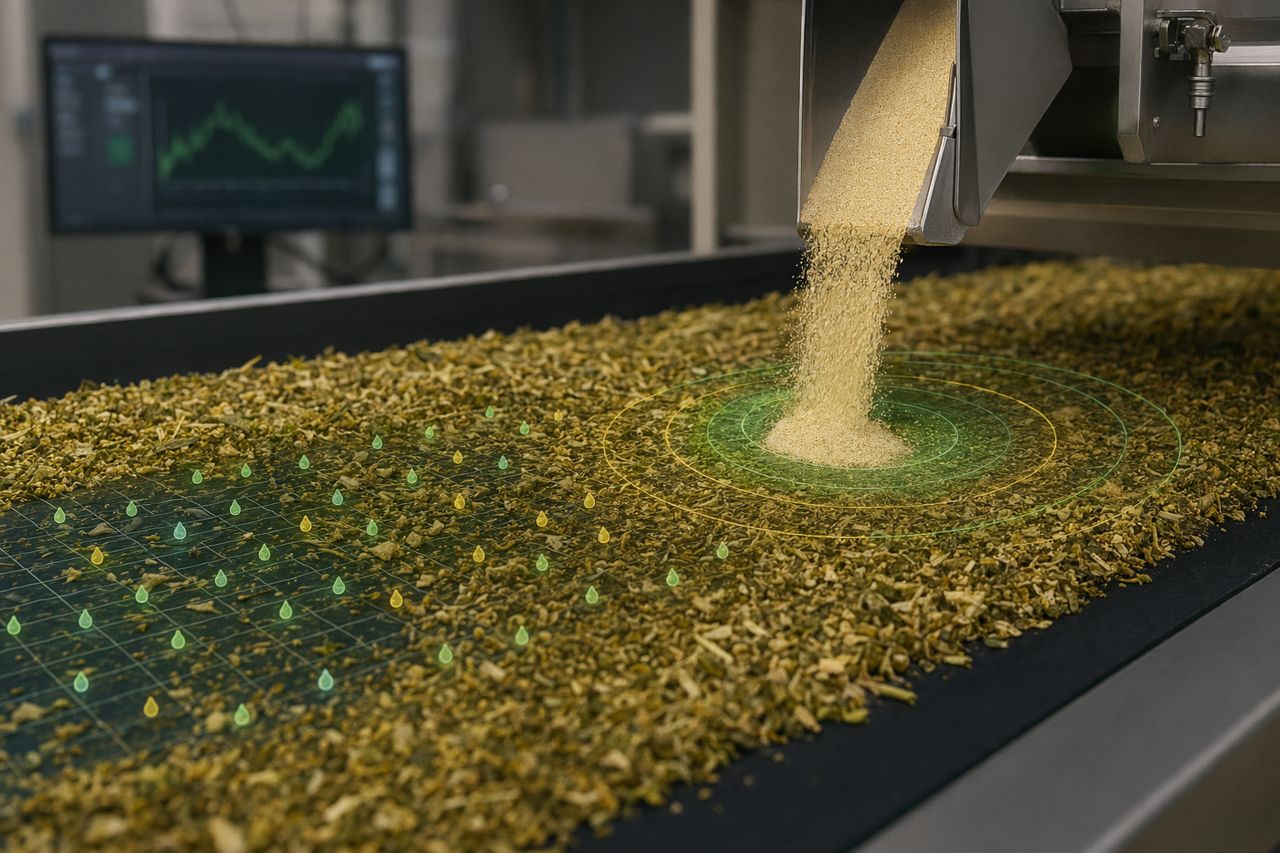
When chopped forage carries less available moisture, the additive has less freedom to move through the crop mass. Enzymes must perform in a tighter contact environment. Lactic acid bacteria need accessible substrate. The formulation has to remain stable in manufacturing, predictable in storage, and practical for the customer’s application system.
That is where a formulation-led silage enzyme supplier for forage additive manufacturing can protect product performance before the additive ever reaches the field.
Why high dry matter forage is harder to formulate for
High dry matter silage typically brings three connected challenges into the additive specification:
- Reduced moisture-assisted distribution across chopped material
- Slower exposure of fermentable carbohydrate where fiber-bound substrate limits early fermentation
- Greater dependence on application accuracy because inconsistent contact can show up as inconsistent fermentation response
For product managers, the issue is not simply whether an enzyme is active in theory. The issue is whether the enzyme system can be built into a commercial additive that blends consistently, holds specification, works alongside the inoculant, and supports repeatable fermentation outcomes under high dry matter pressure.
The formulation question: enzyme function plus manufacturability
A high dry matter silage additive may require enzyme functions such as cellulase, xylanase, beta-glucanase, or related fiber-targeting activities. But selection should not stop at the function name.
A practical enzyme decision should include:
- Substrate fit for the forage and crop mix your product targets
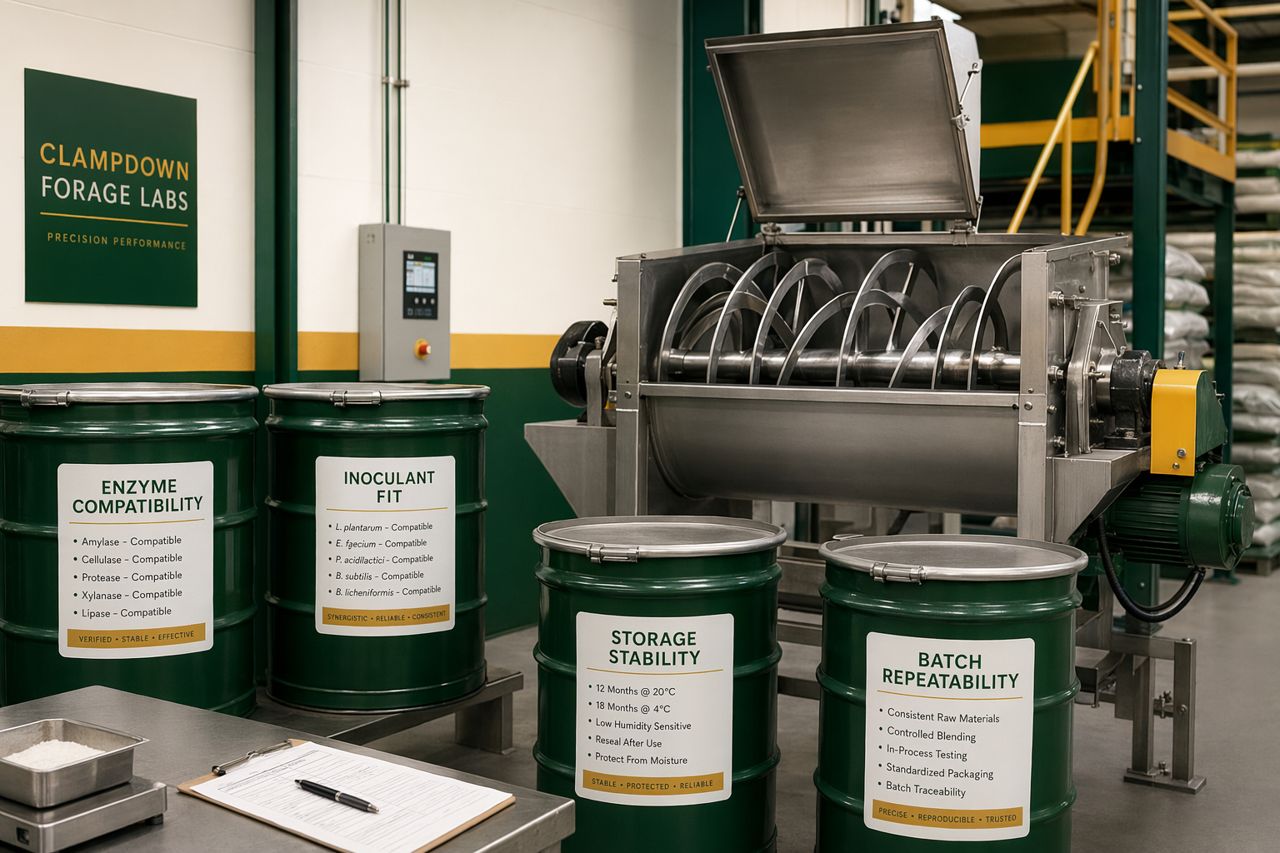
- Compatibility with lactic acid bacteria and other additive components
- Physical behavior in powder, granule, or liquid systems
- Storage stability under the packaging and distribution conditions you actually use
- Blend uniformity at the intended inclusion position in the bill of materials
- Documentation readiness for internal QA, customer files, and regulatory review
Clampdown Forage Labs works with additive manufacturers on enzyme selection that respects the realities of production, not just the desired front-label claim.
What high dry matter conditions do to additive expectations
In wetter forage, additive distribution has more help from plant moisture. In drier forage, the formulation has to work harder. The early fermentation phase can become more sensitive to the available sugar pool, oxygen exclusion, chop consistency, and inoculant contact.
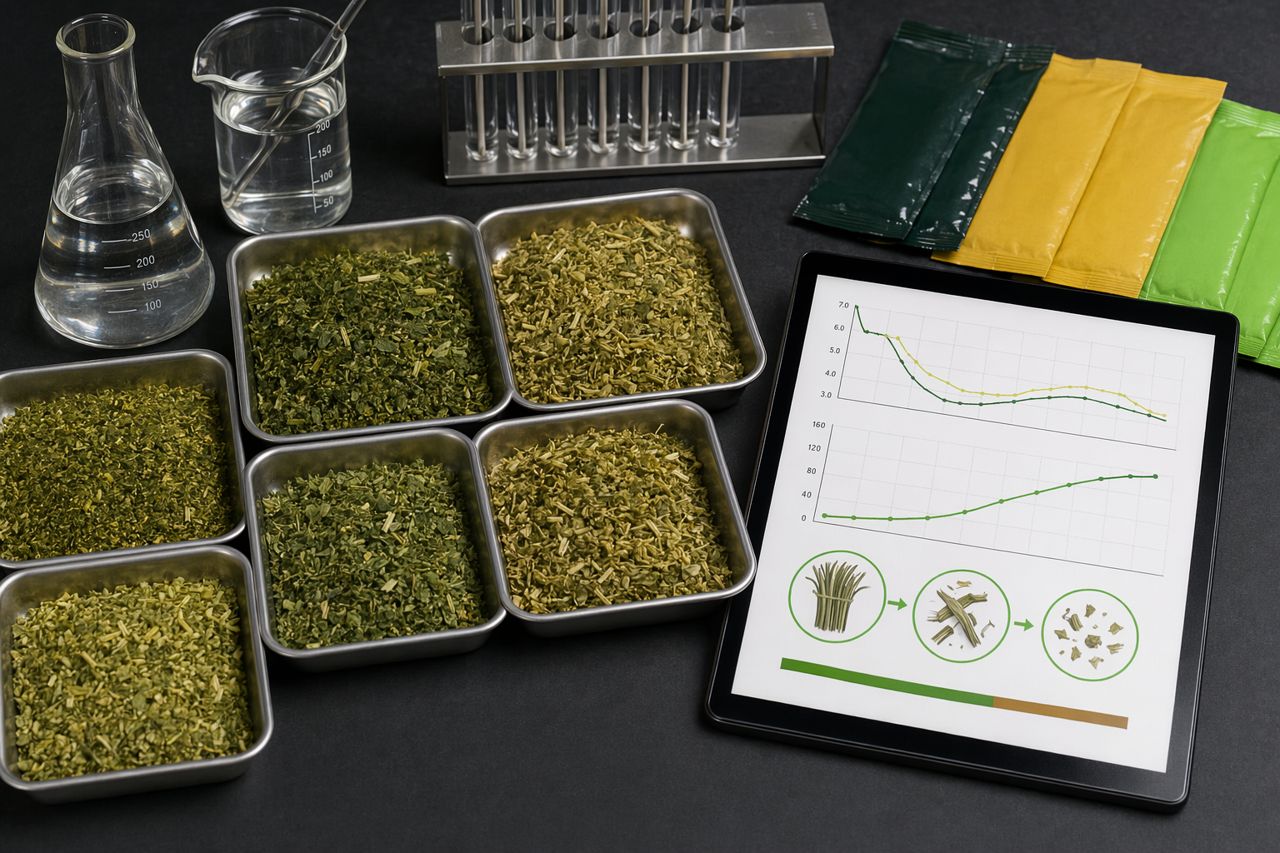
An enzyme package cannot solve every agronomic or harvest variable. It can, however, be designed to support a more available fermentation substrate profile and improve the consistency of the additive’s contribution when moisture is limiting.
For manufacturers, that means fewer vague formulation assumptions and more deliberate specification work:
- Define the forage segment and dry matter band the product is built for.
- Confirm the inoculant strains and other additive components in the formula.
- Select enzyme functions based on substrate access and blend behavior.
- Validate physical compatibility before scale-up.
- Build documentation that supports repeatable purchasing, production, and customer communication.
Compatibility with silage inoculants matters
Many high dry matter additives pair enzymes with lactic acid bacteria. This combination can be commercially strong, but it requires careful compatibility review.
Key questions include:
- Does the enzyme preparation fit the carrier system?
- Does it create handling issues in the final blend?
- Does it affect moisture sensitivity, caking risk, or flow?
- Does the final premix remain stable through expected storage conditions?
- Can the additive be manufactured repeatedly without reformulation drift?
The best enzyme is not always the most aggressive ingredient on paper. It is the ingredient that supports the product promise while staying compatible with the rest of the formulation.
Inclusion rate strategy without overbuilding the formula
High dry matter silage can tempt manufacturers to overbuild. That may increase cost, complicate stability, and create unnecessary handling constraints.
A better approach is to align the enzyme inclusion strategy with:
- Target forage type
- Crop maturity profile
- Expected customer application format
- Finished product positioning
- Required shelf life
- Cost-in-use target
- QA and documentation expectations
Clampdown Forage Labs helps product teams narrow the enzyme bill of materials so the additive is commercially defendable, manufacturable, and fit for the intended silage challenge.
QA and batch repeatability should be part of the brief
For industrial additive plants, repeatability is a product feature. A high dry matter additive should not depend on heroic blending or last-minute adjustments.
A strong enzyme supply brief should include:
- Finished format: powder, soluble powder, granule, or liquid
- Carrier and co-formulant list
- Desired handling profile
- Packaging format and storage conditions
- Target markets and documentation needs
- Compatibility expectations with inoculant strains
- Planned application method and dilution environment
With that information, the enzyme selection process becomes much more precise. The result is a specification that purchasing, QA, production, and technical sales can all use.
Explainer video: formulating for high dry matter forage
[Embedded faceless explainer video: High dry matter silage additive formulation challenges]
This short video summarizes why high dry matter forage changes enzyme selection, inoculant compatibility, and additive manufacturing requirements.
What to ask your enzyme supplier
Before approving an enzyme source for a high dry matter silage additive, ask for clarity on:
- Recommended formulation role, not just enzyme category
- Physical format options and handling profile
- Compatibility with inoculant-based systems
- Stability expectations in your chosen product format
- Documentation available for supplier qualification
- Support for scale-up and production troubleshooting
- Commercial supply consistency for repeat orders
A supplier should be able to speak in terms your plant can use: formulation behavior, batch consistency, documentation, packaging, logistics, and technical support.
Build a high dry matter additive with fewer unknowns
High dry matter silage is unforgiving. Your additive formula should not be.
Clampdown Forage Labs supplies enzyme solutions for silage additive manufacturers that need practical selection support, manufacturing-aware specifications, and reliable commercial supply. If you are developing, revising, or qualifying an enzyme package for a high dry matter forage product, we can help you define the right path before scale-up.
Request a quote through the on-site form and tell us your target forage, finished product format, inoculant system, packaging plan, and commercial requirements. We will respond with a formulation-led supply discussion built around your additive program.
Request a quote